A responsive CPD platform designed to make compliance simpler for healthcare practitioners by giving them a clearer, more streamlined way to purchase, complete, and track CPD.
The Challenge
Healthcare practitioners experience CPD as fragmented, time-consuming, and difficult to manage alongside their demanding schedules.
The experience also needed to work across two connected systems, and support a more flexible “buy-as-you-need” CPD model.

For e-commerce, payment processing, order and account management, etc.
 CPD&ME
A custom CPD portal for activity access and progress tracking.
My Role
I led the end-to-end product design process for the platform, from research and workflow strategy through to responsive UI design, testing, and supporting development.
Activity Lifecycle Logic
Defined the states, transitions, and rules that govern how activities move through their lifecycle.

Activity Flow Mapping
Mapped the ideal user flow and identified questions, edge cases, and opportunities before moving into design.

Exploring Responsive Solutions
Explored layouts, navigation patterns, and activity views across mobile, tablet, and desktop to identify the most effective experience for each device.

Supporting Implementation
Worked closely with developers, providing specifications and annotations to ensure activity states, expiry rules, and responsive behaviours were implemented consistently.

Key Decisions
Preventing Accidental Repurchases
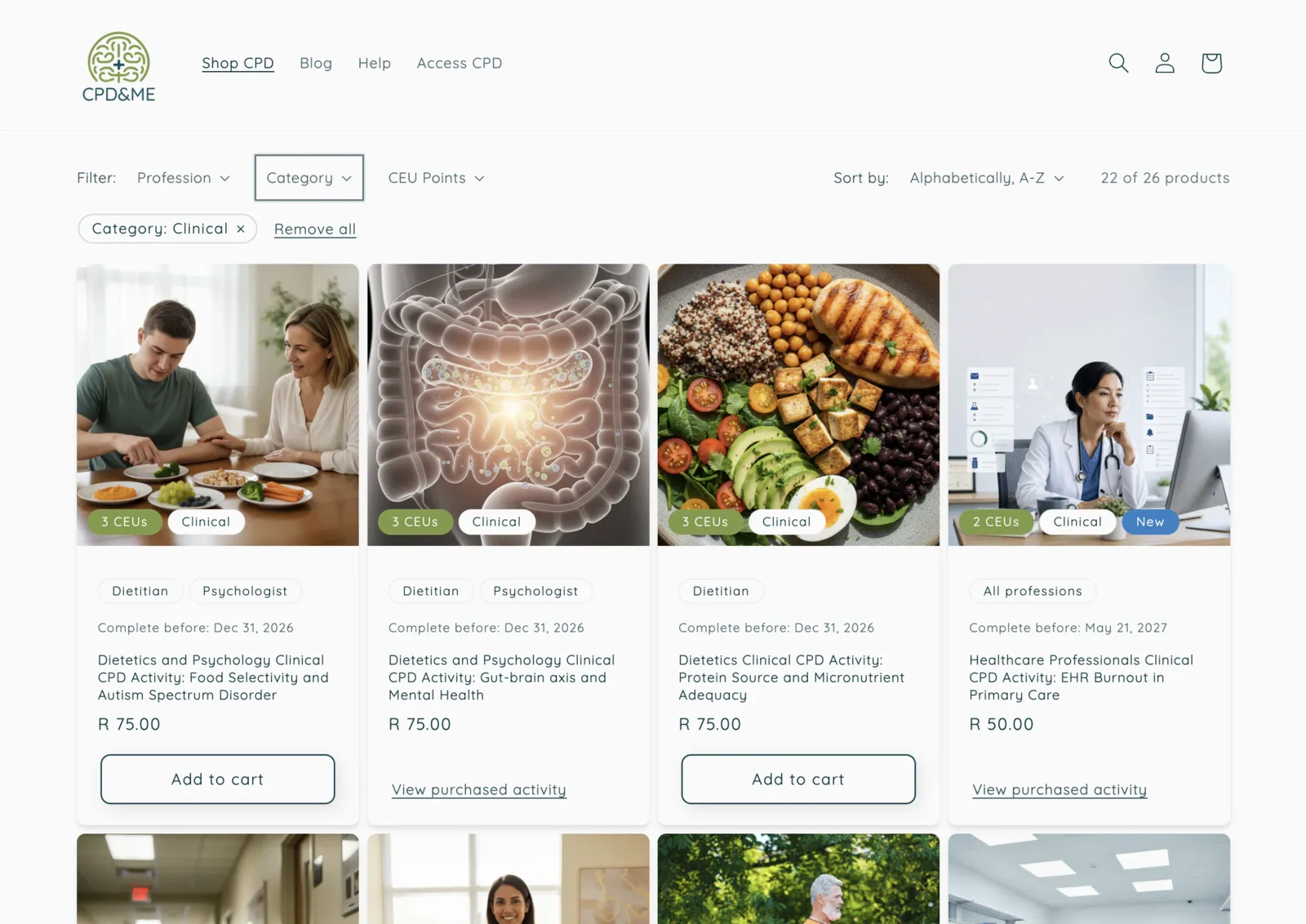
After an activity is purchased the Shopify storefront dynamically replaces the “Add to Cart” with “View Purchased Activity”, redirecting users back to the CPD portal instead.
This prevents accidental repurchases and reduces friction between Shopify and the custom CPD portal.
Capturing Data Accurately
Capturing HPCSA registration numbers of users was required for compliance and a challenge due to the limitations within Shopify’s sign-up flow.
To solve this, I designed a two-layered capture approach:
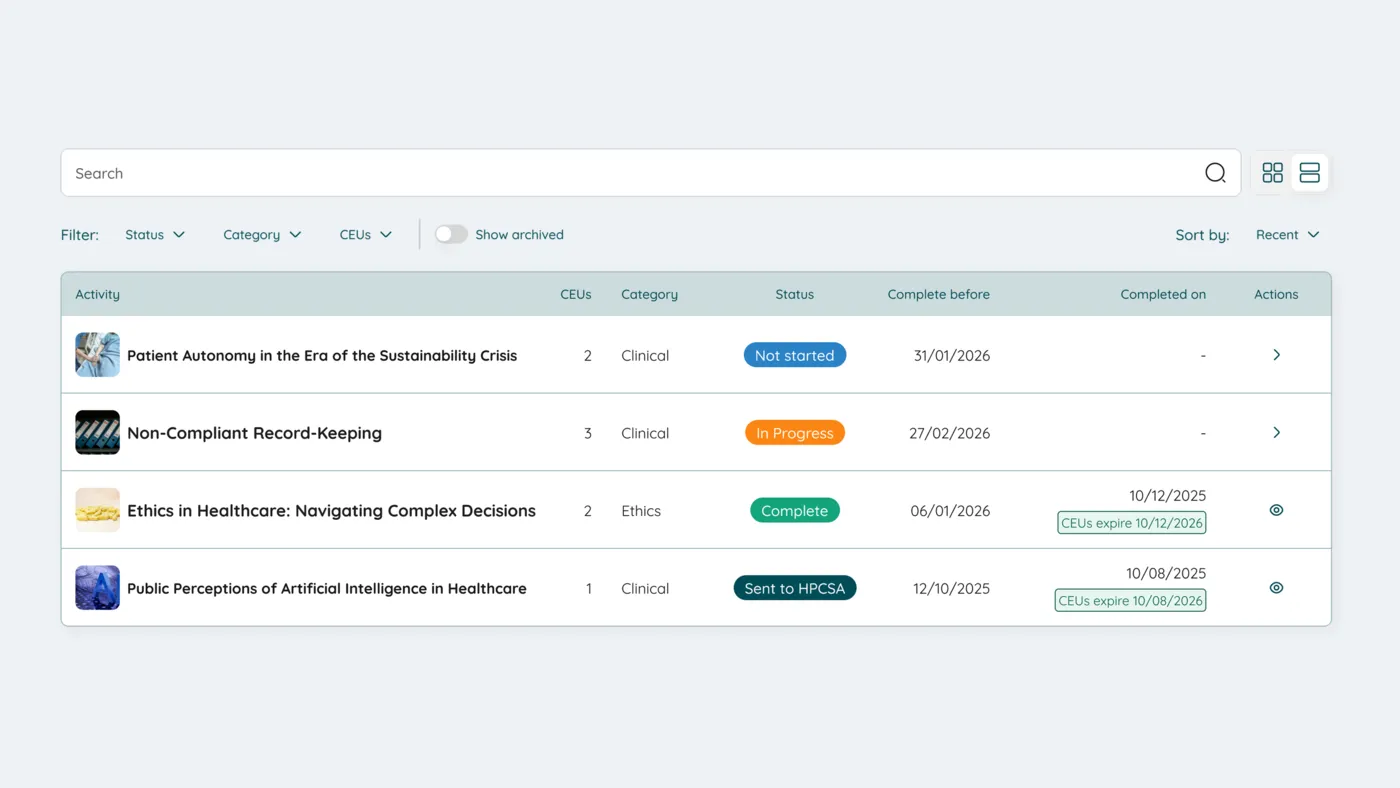
Progress Tracking & Visibility
The platform needed to help users understand:
- What they had purchased
- Where they were in the completion process
- How many CEUs they had accumulated
Therefore, activities included clear status states and automatic progress saving across sessions and devices, allowing users to leave and return without losing progress.
Designing for Real-World Usage
Healthcare practitioners complete CPD opportunistically; between patients, after hours, or over weekends. Therefore, responsiveness was treated as a core workflow consideration.
The platform was designed responsively, with the ‘My Activities’ view and Quiz UI adapting based on available screen space.
Outcome
The platform gave practitioners:
- Clearer visibility into their activities and CEU progress
- More flexibility in how and when they completed CPD
- Better transparency around submission and compliance states
From a business perspective, the platform supported a more scalable self-service model while creating the foundation for future expansion into additional CPD formats such as video-based learning.
The website is very easy to access and navigate, with a clear and user-friendly layout that makes completing CPD activities quick and stress-free.
Reflection
This project showed me the importance of designing around operational realities. Many of the decisions were workflow and systems decisions shaped by:
- Compliance requirements
- Fragmented user behaviour
- Technical constraints
- Business scalability needs